Software as a Service has changed the way businesses make and provide software. Now people can use Software as a Service applications on the internet instead of putting software on their own computers. This makes Software as a Service easier to use. It can be used by more people, but it also creates some big security problems.
Software as a Service platforms have a lot of information, like customer data, payment details, business records, login credentials and secret files. If there is one spot in the security, it can put all this information in danger.
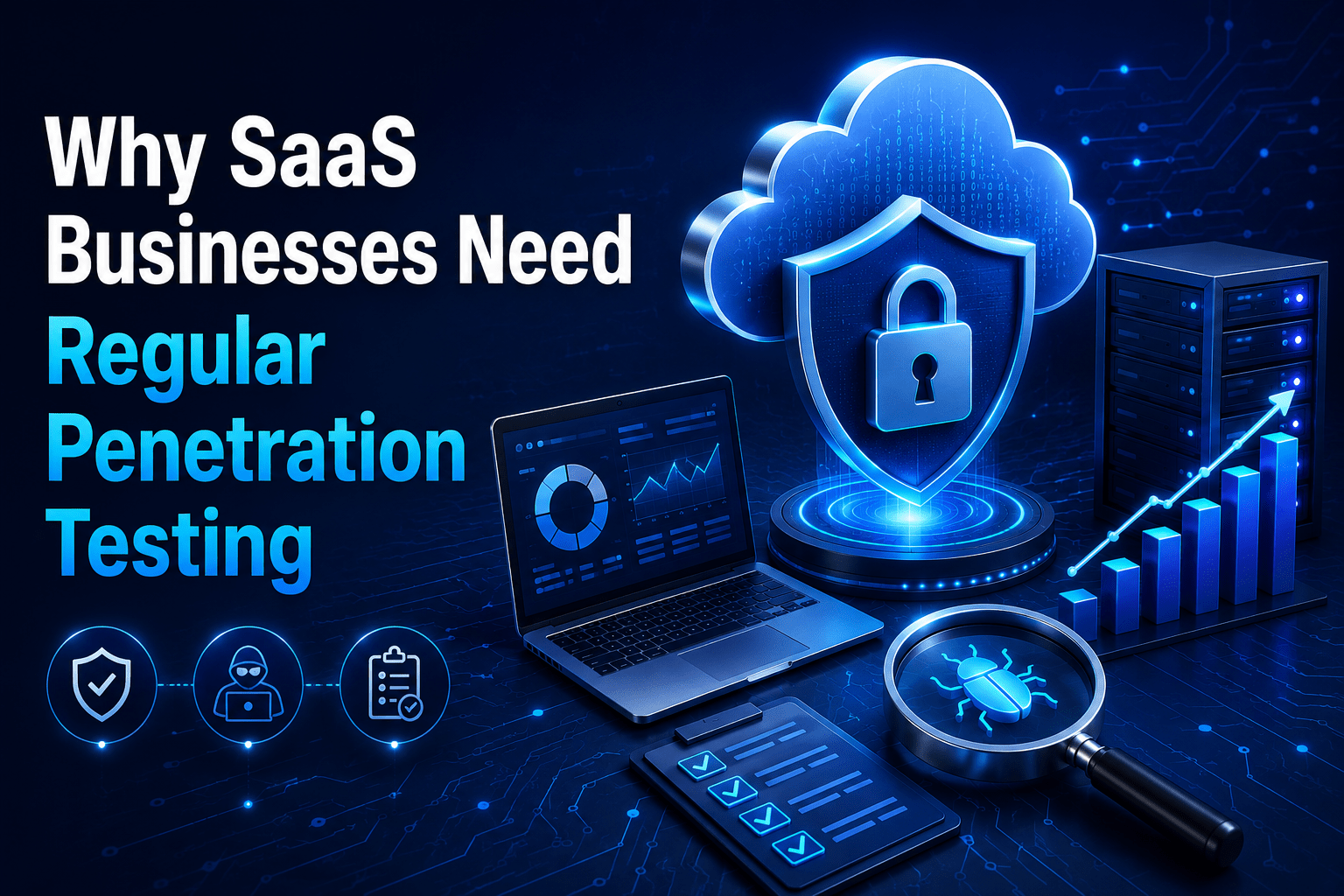
That is why Software as a Service businesses need to do penetration testing all the time. Penetration testing helps companies find out where they are weak and what security weaknesses they have before bad people can use those weaknesses to do harm. Penetration testing for Software as a Service is important because it helps keep Software as a Service safe.
What Is SaaS Penetration Testing?
SaaS penetration testing is a controlled security check where people who work in cybersecurity test an application, the APIs, the network and the systems that go along with it for weaknesses. The purpose is not just to discover security problems. A penetration test helps to see if a weakness can really be used by someone and what effect it might have on the company. The OWASP Web Security Testing Guide covers areas like login processes, permissions, handling of sessions, checking what users type into security fields for APIs, how the business works and how systems are set up.
Why Do SaaS Businesses Need Regular Penetration Testing?
1. SaaS Applications Are Constantly Changing
SaaS companies regularly release new features, update APIs, change configurations, and add integrations. Every change can introduce a new security weakness. A feature that was secure six months ago may have new risks after several updates.
Regular penetration testing helps identify vulnerabilities introduced by changes in the application.
2. Protect Customer Data
SaaS platforms often store large amounts of customer information. If attackers gain unauthorised access, the consequences can include data theft, financial loss, legal problems, and damage to customer trust. Penetration testing can help identify weaknesses that could expose sensitive information. Protecting customer data should be a continuous process, not a one-time activity.
3. Find Authentication and Access Control Problems
When we talk about authentication, we are talking about figuring out who a user really is. On the other hand, access control is about what that user is allowed to do.
Authentication and access control problems can be an issue.
A SaaS application can have strong passwords, but it can still have problems with access control.
For example, a user might be able to see information that belongs to another customer. This can happen because the application does not properly check if the user owns the data they are trying to access.
The SaaS application has authentication and access control problems because of this. Testing authentication and access control is an important part of testing the security of a web application.
We need to test authentication and access control to make sure the SaaS application is secure.
4. Secure APIs and Integrations
APIs are very important for SaaS platforms. They allow different applications, mobile apps, payment systems and third-party services to talk to each other. If APIs are not secure, they can expose sensitive information or allow people to do things they should not be able to do.
API penetration testing can help us find problems with authentication, authorisation, input validation, data exposure and other weaknesses in APIs.
APIs are often connected directly to the backend systems and databases of the SaaS application. So we should include APIs in our SaaS security testing strategy to secure the SaaS application and its APIs. This will help us secure the SaaS application and its APIs.
5. Identify Business Logic Vulnerabilities
Not every problem with a system is because of a mistake in the code. Some security issues happen when a system does something that the people in charge of the business did not want it to do.
For example, someone who wants to cause trouble may be able to manipulate the way a subscription works, get around a rule that’s in place, get to another user’s information or do something that they should not be allowed to do.
Business Logic Vulnerabilities like these can be hard for computers to find, which is why it is a good idea to have a person test the system to see if they can find any problems.
6. Reduce the Risk of a Data Breach
No system is completely safe from attacks. However, businesses can make it less likely that they will be attacked by finding problems before someone who wants to cause trouble does. A test of the system called a penetration test can help figure out how safe the system is from the point of view of someone who wants to cause trouble.
This test can help answer questions like:
Where could someone who wants to cause trouble get into the system? What information could they possibly get to? Can they get access that they should not have?
Can they get around the security measures that are in place? What would happen to the business if someone did get in?
7. Support Compliance and Customer Trust
Many SaaS businesses work with enterprise customers that require evidence of strong security practices. Security testing and penetration testing may support broader security and compliance programs, depending on the organisation’s requirements.
More importantly, regular testing demonstrates that security is being actively reviewed rather than treated as a one-time checklist.
How Often Should a SaaS Business Perform Penetration Testing?
There is no single schedule that works for every SaaS company. Testing frequency should depend on factors such as:
1. How frequently the application changes
2. The sensitivity of customer data
3. New features and APIs
4. Major infrastructure changes
5. New integrations
6. Previous security findings
7. Business and compliance requirements
What Does a SaaS Penetration Test Usually Cover?
Depending on the scope, testing may include:
1. Web Application Testing – Identifying vulnerabilities in the SaaS application. –
2. API Security Testing – Testing API authentication, authorisation, data exposure, and other security weaknesses.
3. Authentication Testing – Checking login authentication controls.
4. Authorisation Testing – Verifying that users can access only the resources they are permitted to access.
5. Cloud and Infrastructure Testing – Assessing relevant cloud and infrastructure security controls.
6. Business Logic Testing – Looking for ways security or business rules can be bypassed.
Final Thoughts
SaaS companies operate fast. Their security must stay up, to date. New features, APIs, connections, users and systems can lead to ways for attacks to happen. Regular penetration testing allows SaaS companies to find these weaknesses before bad people do.
A good SaaS security approach should mix penetration testing with coding, managing vulnerabilities, keeping an eye on things, controlling who can access what and checking security often. Do not wait until there is a security problem to find a weakness. Test the SaaS application, know the dangers, and fix issues before they turn into problems.