Every day, courts across India hear cases where the critical evidence is not a physical object — it is a WhatsApp message, a deleted call log, a CCTV recording, or a trail of data left behind on a smartphone. The science responsible for collecting, preserving, and analysing this evidence is called digital forensics.
Whether you are a lawyer building a case, a corporation investigating data theft, a law enforcement officer pursuing a cybercrime, or an individual trying to prove your innocence — understanding what digital forensics is, and how it works, can be the difference between winning and losing your case.
What is Digital Forensics?
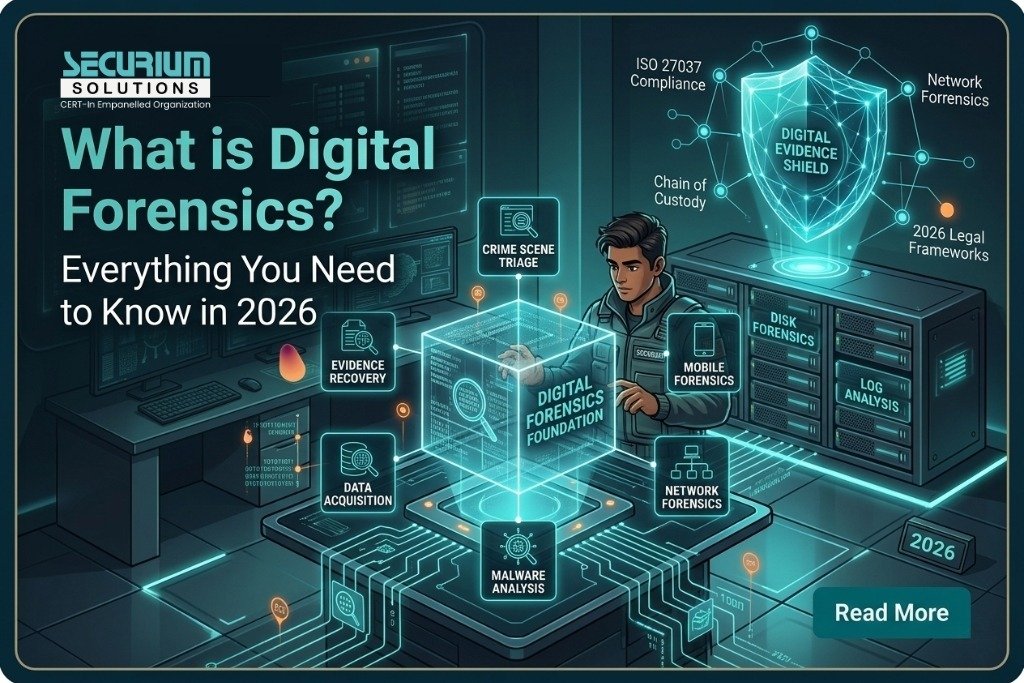
Digital forensics — also known as computer forensics or cyber forensics — is the scientific discipline of collecting, preserving, examining, analysing, and reporting on digital evidence from electronic devices and digital environments. It applies the rigour of forensic science to the digital world.
Just as a fingerprint expert uses validated techniques to collect and analyse physical evidence, a digital forensic examiner uses validated tools and accepted methodologies to extract and interpret evidence from smartphones, computers, servers, DVR systems, cloud accounts, and network infrastructure.
The defining characteristic of digital forensic evidence is that it must be court-admissible — meaning the methods used to collect and analyse it must be scientifically sound, repeatable, and defensible under cross-examination by opposing counsel.
Why is Digital Forensics Important in India?
India recorded over 52,000 cybercrime cases in 2021 alone, and the number continues to rise. From UPI fraud and mobile phone scams to corporate data theft and matrimonial disputes involving digital evidence — the demand for professional digital forensic examination has never been greater.
The Indian Evidence Act and the Information Technology Act both recognise electronic evidence as admissible in court — provided it meets specific standards for authenticity, integrity, and chain of custody. A forensic examination conducted by a qualified, certified examiner ensures that your digital evidence meets those standards.
The 5 Phases of Digital Forensic Examination
Every professional digital forensic examination follows a structured five-phase process. Understanding this process helps you appreciate why professional examination is essential — and why self-collected digital evidence often fails in court.
Phase 1: Acquisition
The examiner creates a forensically sound copy of the original evidence — a forensic image — using validated tools and write-blockers that prevent any data from being written to the original device during copying. A hash value (a unique digital fingerprint) is generated at this stage to prove the copy is identical to the original.
Phase 2: Preservation
The original evidence is stored securely in a tamper-evident environment. A chain of custody document is created and maintained, recording every person who handles the evidence, when, and for what purpose. This chain of custody is essential for admissibility.
Phase 3: Examination
Certified forensic examiners work on the forensic copy — never the original — using industry-leading forensic tools to identify, extract, decode, and process relevant data. Every action taken is documented in contemporaneous examination notes.
Phase 4: Analysis
Extracted data is placed in context — establishing timelines, identifying relevant artefacts, correlating data across multiple sources, and drawing objective conclusions supported by the evidence. This is where forensic science meets forensic interpretation.
Phase 5: Reporting
A comprehensive, court-ready report is prepared — documenting the examiner’s qualifications, methodology, tools used (with version numbers), findings, and expert opinion. The report is formatted to meet Indian judicial requirements.
Types of Digital Forensics
Digital forensics covers a wide spectrum of disciplines — each specialising in a different type of device, data, or environment:
- Mobile Device Forensics — examination of smartphones and tablets
- Computer Forensics — analysis of laptops, desktops, and servers
- DVR/NVR Forensics — extraction of CCTV and surveillance footage
- Cloud Forensics — acquisition of evidence from cloud platforms
- Audio Forensics — examination of audio recordings for authenticity
- Network Forensics — analysis of network traffic and communications
- Malware Forensics — investigation of malicious software
- OSINT — open-source intelligence gathering from public digital sources
When Do You Need a Digital Forensic Examination?
Digital forensic examination may be needed in a wide range of situations:
- A criminal case involving electronic evidence (fraud, cybercrime, threats, harassment)
- A civil case where digital records are disputed (contracts, communications, timestamps)
- A corporate investigation into data theft, IP exfiltration, or employee misconduct
- A matrimonial dispute where digital evidence is relevant to proceedings
- A cyber incident such as ransomware, hacking, or a data breach
- Insurance or financial fraud investigations requiring digital evidence analysis
Frequently Asked Questions
Is digitally recovered evidence admissible in Indian courts?
Yes — provided it is collected, preserved, and analysed using scientifically validated methods by a qualified examiner. The Information Technology Act, 2000 and the Indian Evidence Act both recognise electronic evidence as admissible. The key requirements are a properly maintained chain of custody, hash-verified integrity, and a report prepared by a certified forensic examiner.
How is digital forensics different from hacking?
Digital forensics is a legally authorised, methodologically rigorous discipline conducted by certified professionals on evidence submitted for examination. It is the opposite of hacking — it aims to discover the truth about what happened on a device, not to gain unauthorised access. All our examinations are conducted within the bounds of law, with appropriate authorisation from the device owner or a court order.
How do I preserve digital evidence before contacting a forensic lab?
The most important rule is: do not tamper with the device. Do not attempt to access it, reset it, update it, or transfer data from it. If it is a phone, put it in airplane mode to prevent remote wipe. If it is a computer, shut it down properly. Place it in a sealed, labelled bag and call us immediately for guidance on evidence handling.
📞 CALL TO ACTION (Place at end of article)
Need a digital forensic examination? Contact Securium Forensic Lab for a free, confidential initial consultationa. We serve law enforcement, legal professionals, corporations, and individuals across India and internationally.
📞 +91 8368545467 | 📧 sunil.singh@securiumsolutions.org | www.securiumsolutions.com