A cybersecurity risk assessment is a step‑by‑step process that helps identify and measure security risks in an organization’s systems, applications, networks, data, people and processes.
It helps businesses answer questions:
Which information and systems are the most valuable?
What vulnerabilities exist?
Which threats could target the organization?
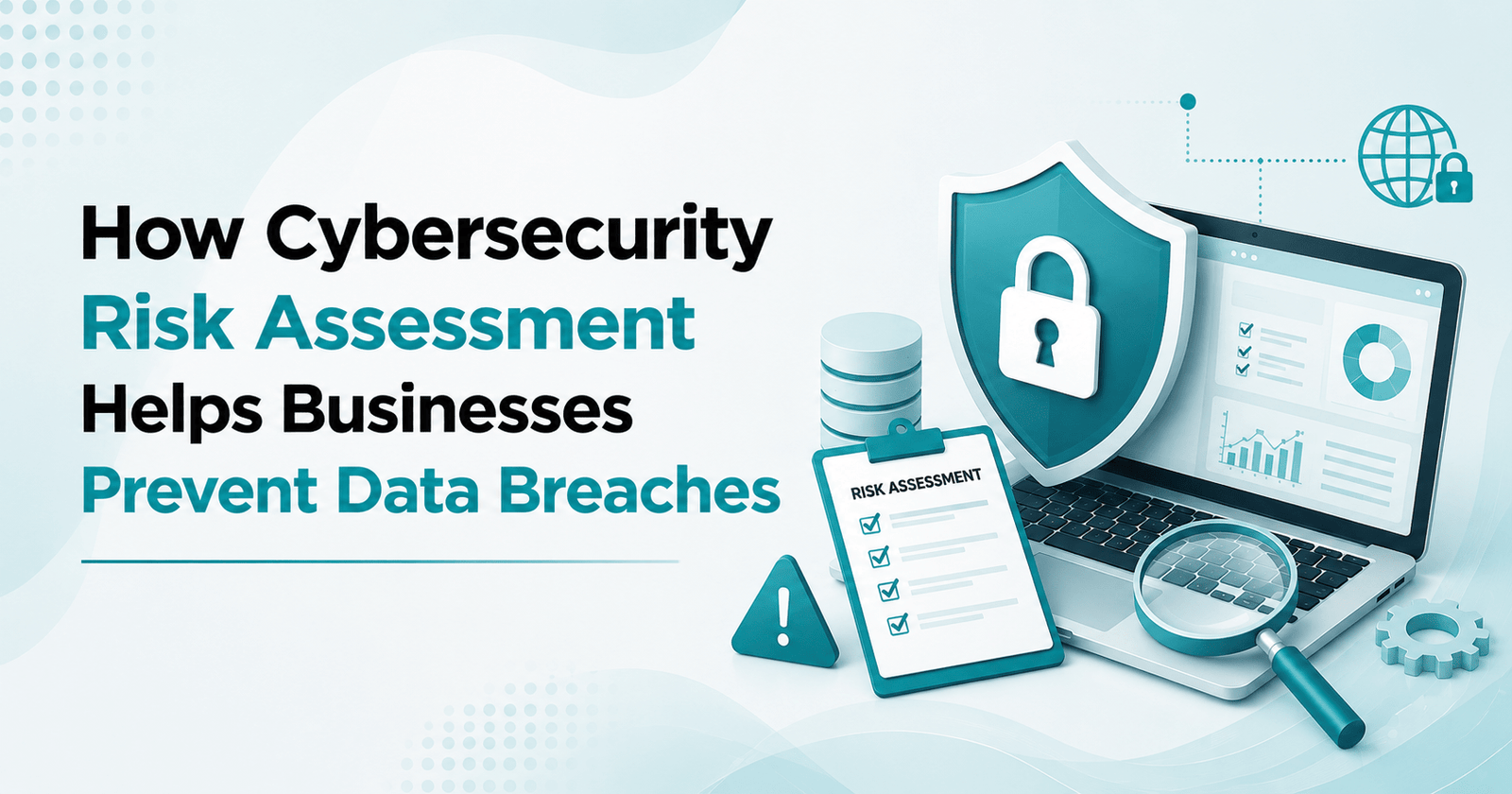
How Cybersecurity Risk Assessment Helps Businesses Prevent Data Breaches
In today’s world businesses rely on technology to store customer information, financial records, employee data and other sensitive business information.. This growing reliance also creates new cybersecurity risks. A single security weakness can allow attackers to access information disrupt operations or damage a company’s reputation.
This is where a cybersecurity risk assessment becomes crucial. A cybersecurity risk assessment helps businesses spot security risks understand their impact and take preventive action before those risks become serious incidents.
What Is a Cybersecurity Risk Assessment?
How likely is a security incident?
What could happen if a vulnerability is exploited?
Which risks should be addressed first?
Of waiting for a cyberattack to show weaknesses companies can use risk assessments to find security gaps on their own.
Why Is Risk Assessment Important?
Many companies use security tools like firewalls, antivirus programs, endpoint protection and access controls.. Having security tools does not mean a company is safe.
A system might still have software, weak passwords, too much user access, wrong settings on cloud services or open applications.
A cybersecurity risk assessment helps find these problems. Looks at how they might hurt the company.
By knowing their risks companies can decide better where to spend their time and money on cybersecurity.
How Risk Assessment Helps Prevent Data Breaches
- Identifies Security Vulnerabilities
One of the things, about risk assessment is finding problems before hackers do. An assessment might find software, unsafe settings, weak login methods, open systems or too much access Once these problems are found companies can fix them first. Stop hackers from taking advantage.
- Protects Critical Business Data
I have seen that not every piece of information is equally important. Customer records, financial information, intellectual property and confidential business documents often need protection. A risk assessment helps organizations find their critical data and learn where it is stored who can access it and how it is protected. This lets security teams put their controls on the information that matters most.
- Prioritizes High-Risk Issues
I have seen businesses have hundreds of security vulnerabilities yet fixing everything at the time may not be practical. A risk assessment helps organizations prioritize issues based on how likely they’re the potential impact.
For example a vulnerability in a facing application that holds sensitive customer information may need immediate attention while a low-impact issue on an isolated internal system may wait. This approach helps organizations use their time and cybersecurity budget effectively.
- Strengthens Access Controls
I have seen access is a common cause of data exposure. A risk assessment can review user accounts, administrator privileges, remote access, authentication methods and permissions. It may reveal that employees have access, to information they do not need or that former employees still have accounts. Implementing access controls and the principle of least privilege can significantly reduce unnecessary exposure.
- Evaluates Third-Party Risks
Businesses often share information with vendors, cloud providers, contractors and other third parties. This means an organization’s cybersecurity risk can extend beyond its network. Vendor risk assessment can help businesses evaluate how third parties protect information and whether they have appropriate security controls. This is particularly important when vendors have access to customer or business data.
- Improves Security Controls
Risk assessment helps organizations determine whether their existing security controls are suitable for their risks. Depending on the findings businesses may need to improve:
- Multi-factor authentication
- Encryption
- Network segmentation
- Endpoint security
- Vulnerability management
- Backup systems
- Security monitoring
- Data protection
- Employee security awareness
This creates a targeted and effective cybersecurity strategy.
- Improves Incident Preparedness
Risk assessment can also help businesses prepare for security incidents. By identifying attack scenarios such, as phishing, ransomware, credential theft, insider threats and data exfiltration organizations can develop appropriate response procedures. A strong incident response plan can help reduce the time required to detect contain and recover from an attack.
The Cybersecurity Risk Assessment Process
A typical risk assessment involves important steps:
Identify Assets: Determine which systems, applications, devices and data need protection.
Identify Threats: Understand threats that could affect those assets.
Identify Vulnerabilities: Find weaknesses that attackers could exploit.
Analyze Risk: Evaluate the likelihood and potential business impact.
Prioritize Risks: Focus on the risks that could cause the damage.
Implement Controls: Apply security measures to reduce identified risks.
Monitor Continuously: Review and reassess risks as technologies, systems and threats change.
Cybersecurity risk assessment is a part of a proactive security strategy. It helps businesses understand their vulnerabilities protect information prioritize security investments and reduce the likelihood of data breaches.
A risk assessment should not be treated as a one-time activity. Cyber threats, technologies, vendors and business operations continuously change so organizations should regularly review their cybersecurity risks.
The goal is simple: identify security weaknesses before attackers can exploit them.
By combining risk assessments, with vulnerability management, strong access controls, security monitoring, employee awareness and incident response planning businesses can build a stronger cybersecurity posture and better protect the data they depend on.