Cyberattacks are no longer limited to large enterprises. Today, startups, fintech companies, healthcare organizations, SaaS platforms, ecommerce brands, educational institutions, and even small businesses are becoming regular targets of hackers. A single weak password, exposed API, outdated plugin, misconfigured server, or vulnerable web application can open the door to data theft, ransomware, financial loss, and reputational damage.
This is where VAPT services in India play an important role. VAPT helps businesses identify security weaknesses before attackers exploit them. It gives organizations a clear picture of their cyber risk and provides practical steps to fix vulnerabilities.
For companies that handle customer data, financial information, business applications, cloud infrastructure, or sensitive records, VAPT is not just a technical activity. It is a business protection strategy.
What Is VAPT?
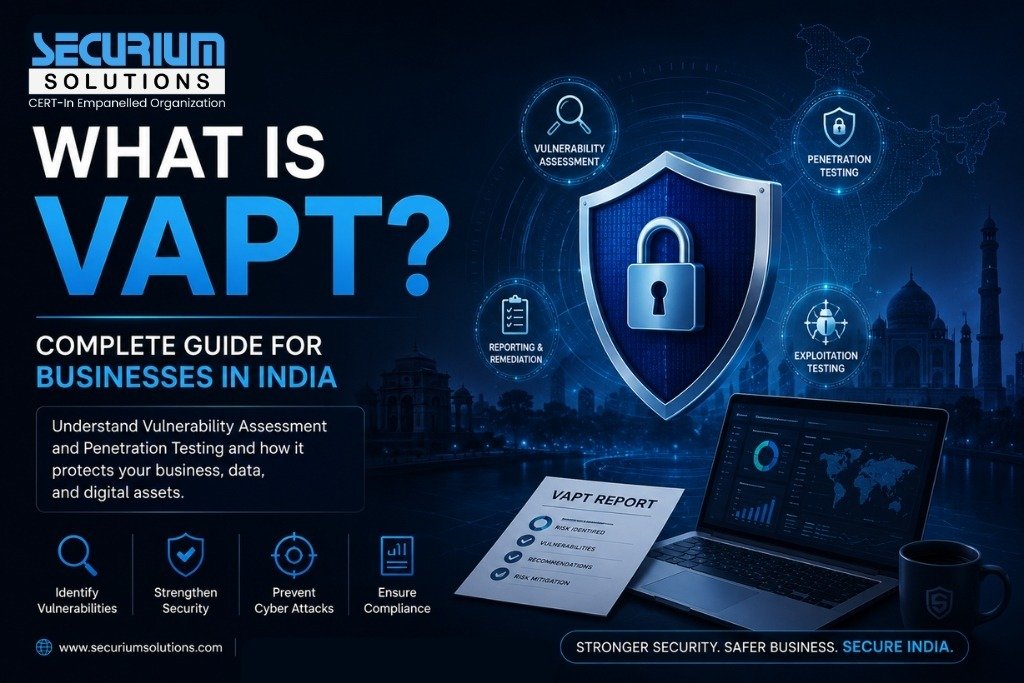
VAPT stands for Vulnerability Assessment and Penetration Testing. It is a cybersecurity testing process used to find, validate, and report security vulnerabilities in applications, networks, servers, APIs, cloud systems, and IT infrastructure.
Although people often use the terms together, vulnerability assessment and penetration testing are not exactly the same.
Vulnerability Assessment focuses on identifying possible security weaknesses. It helps discover issues such as outdated software, weak configurations, missing patches, exposed services, insecure permissions, and known vulnerabilities.
Penetration Testing goes one step deeper. Security experts safely attempt to exploit the identified vulnerabilities to understand how serious they are in a real-world attack scenario.
Together, VAPT helps businesses answer three important questions:
1. Where are the security gaps?
2. How risky are these vulnerabilities?
3. What should be fixed first?
This makes VAPT one of the most important cybersecurity services for modern businesses.
Why Is VAPT Important for Businesses?
Every business today depends on digital systems. Websites, mobile apps, payment gateways, cloud servers, internal networks, CRMs, employee portals, and APIs are now part of daily operations. If any of these systems are weak, attackers can misuse them.
VAPT helps businesses reduce this risk by finding vulnerabilities early.
1. Prevents Data Breaches
A data breach can expose customer records, passwords, financial details, business files, and internal documents. VAPT helps identify the weak points that could lead to such incidents.
2. Protects Business Reputation
Customers trust businesses with their data. A cyberattack can damage that trust overnight. Regular security testing helps companies show that they take cybersecurity seriously.
3. Supports Compliance Requirements
Many industries require security audits and vulnerability testing for compliance. Businesses in fintech, banking, healthcare, ecommerce, SaaS, and government sectors often need VAPT for regulatory and client requirements.
4. Reduces Financial Risk
Cyber incidents can lead to downtime, legal issues, recovery costs, penalties, and customer loss. VAPT helps reduce these risks by fixing vulnerabilities before they become expensive problems.
5. Improves Security Maturity
VAPT gives businesses a clear understanding of their security posture. It helps IT teams prioritize fixes, improve processes, and strengthen infrastructure.
Types of VAPT Services
Different businesses have different security needs. A complete VAPT approach may include testing multiple digital assets.
Web Application Penetration Testing
Web application penetration testing focuses on websites, web portals, admin panels, dashboards, SaaS platforms, and business applications. It helps detect issues like SQL injection, cross-site scripting, broken authentication, insecure file uploads, access control flaws, and session management weaknesses.
Network Penetration Testing
Network penetration testing checks internal and external network infrastructure. It helps identify open ports, weak services, insecure firewall rules, outdated systems, misconfigured devices, and unauthorized access risks.
Mobile Application Penetration Testing
Mobile app penetration testing is important for Android and iOS applications. It checks insecure data storage, weak API communication, poor encryption, insecure authentication, reverse engineering risks, and sensitive data exposure.
API Penetration Testing
APIs are widely used in mobile apps, SaaS products, fintech platforms, and business integrations. API penetration testing helps identify broken authentication, authorization flaws, exposed endpoints, excessive data exposure, and insecure API logic.
Cloud Security Assessment
Cloud security assessment focuses on cloud infrastructure such as AWS, Azure, Google Cloud, and other cloud platforms. It helps find misconfigured storage, weak IAM policies, exposed keys, public buckets, insecure security groups, and poor cloud access controls.
Source Code Review
Source code review helps identify security issues directly in the application code. It is useful for detecting insecure coding practices, hardcoded secrets, weak encryption, input validation issues, and logic flaws.
Common Vulnerabilities Found During VAPT
A professional VAPT audit can uncover many types of vulnerabilities. Some of the most common issues include:
1. SQL Injection
2. Cross-Site Scripting
3. Broken Authentication
4. Broken Access Control
5. Insecure Direct Object References
6. Weak Password Policies
7. Exposed Admin Panels
8. Outdated Software and Plugins
9. Open Ports and Unnecessary Services
10. Server Misconfiguration
11. Cloud Misconfiguration
12. Sensitive Data Exposure
13. Insecure APIs
14. Missing Security Headers
15. Poor Session Management
16. Weak Encryption
17. File Upload Vulnerabilities
Not every vulnerability has the same risk level. Some may be low-risk configuration issues, while others may allow attackers to access sensitive data or take control of systems. That is why proper risk classification is important.
VAPT Process: How It Works
A professional VAPT audit follows a structured process. This ensures that testing is safe, controlled, and useful for the business.
Step 1: Scope Discussion
The first step is to define the testing scope. This includes websites, applications, APIs, IP addresses, servers, cloud assets, mobile apps, and testing timelines.
A clear scope helps both the business and security team understand what will be tested and what will remain out of scope.
Step 2: Information Gathering
Security experts collect technical information about the target environment. This may include domain details, technologies used, exposed services, application behavior, endpoints, and infrastructure information.
Step 3: Vulnerability Assessment
In this phase, testers identify possible vulnerabilities using a mix of manual testing and security tools. The goal is to discover security gaps across the defined scope.
Step 4: Penetration Testing
After identifying vulnerabilities, testers safely validate them. This helps confirm whether the vulnerability can be exploited and what level of impact it may have.
Step 5: Risk Classification
Each vulnerability is classified based on severity. Usually, findings are marked as Critical, High, Medium, Low, or Informational.
This helps businesses understand which issues need immediate attention.
Step 6: Reporting
The security team prepares a detailed VAPT report. The report includes technical findings, business impact, proof of concept, screenshots, severity level, and remediation recommendations.
Step 7: Retesting
After the business fixes the vulnerabilities, retesting is performed to verify whether the issues have been resolved properly.
What Should a VAPT Report Include?
A good VAPT report should be clear enough for both technical and management teams. It should not only list vulnerabilities but also explain their impact and solution.
A professional VAPT report should include:
1. Executive summary
2. Scope of testing
3. Testing methodology
4. List of vulnerabilities
5. Severity rating
6. Business impact
7. Technical proof of concept
8. Screenshots or evidence
9. Affected URLs, IPs, or endpoints
10. Remediation steps
11. Retesting status
12. Final security recommendations
For business leaders, the executive summary helps understand overall risk. For developers and IT teams, the technical section helps fix the issues properly.
How Often Should Businesses Conduct VAPT?
Businesses should conduct VAPT at least once or twice a year. However, testing should also be done whenever there is a major change in the digital environment.
You should consider VAPT after:
1. Launching a new website
2. Releasing a mobile application
3. Adding new APIs
4. Migrating to cloud infrastructure
5. Making major code changes
6. Integrating payment gateways
7. Changing server or network setup
8. Facing a security incident
9. Preparing for compliance audit
10. Onboarding enterprise clients
Cybersecurity is not a one-time activity. New vulnerabilities appear regularly, and systems keep changing. Regular VAPT helps businesses stay prepared.
Why Choose a CERT-In Empanelled VAPT Company?
Choosing the right cybersecurity partner is important. A VAPT audit should be handled by experienced professionals who understand real-world attack techniques, business risk, compliance needs, and proper reporting standards.
Working with a CERT-In Empanelled cybersecurity company adds more trust and credibility to the audit process. It is especially useful for businesses that need security audits for compliance, client requirements, regulatory needs, or enterprise contracts.
Securium Solutions is a CERT-In Empanelled cybersecurity company offering professional VAPT services, security audits, compliance assessments, cloud security, digital forensics, incident response, SOC/SIEM monitoring, and managed security services for businesses in India and global markets.
With expert-led testing and practical remediation guidance, Securium Solutions helps organizations identify vulnerabilities, reduce cyber risk, and strengthen their overall security posture.
Industries That Need VAPT
VAPT is important for any organization that uses digital systems. However, some industries need it more due to sensitive data, compliance requirements, and high cyber risk.
These include:
1. Banking and finance
2. Fintech companies
3. Healthcare organizations
4. SaaS companies
5. Ecommerce businesses
6. Educational institutions
7. Government organizations
8. Manufacturing companies
9. Retail businesses
10. Telecom companies
11. Aviation sector
12. Energy sector
If your business stores customer data, accepts online payments, uses cloud infrastructure, or runs web and mobile applications, VAPT should be part of your security plan.
VAPT is one of the most effective ways to understand and reduce cyber risk. It helps businesses find vulnerabilities before attackers do, protect sensitive data, meet compliance needs, and build trust with customers and partners.
In today’s threat landscape, relying only on firewalls, antivirus tools, or basic security settings is not enough. Businesses need regular testing, expert analysis, and practical remediation support.
If your organization has not conducted VAPT recently, now is the right time to review your security posture.
Need Professional VAPT Services in India?
Need professional VAPT services in India? Securium Solutions helps businesses identify, validate, and fix security vulnerabilities through expert-led VAPT, compliance audits, cloud security assessments, digital forensics, SOC monitoring, and managed cybersecurity services.
Contact Securium Solutions today to secure your digital infrastructure.
FAQs
What is VAPT?
VAPT stands for Vulnerability Assessment and Penetration Testing. It is a cybersecurity process used to identify, validate, and report vulnerabilities in applications, networks, APIs, cloud systems, and IT infrastructure.
Why do businesses need VAPT?
Businesses need VAPT to prevent data breaches, reduce cyber risk, protect customer data, improve compliance readiness, and identify security weaknesses before attackers exploit them.
How often should VAPT be done?
VAPT should be conducted at least once or twice a year. It should also be done after major code changes, cloud migration, new application launches, API integrations, or security incidents.
What is included in a VAPT report?
A VAPT report includes vulnerability details, severity ratings, proof of concept, business impact, screenshots, affected assets, remediation steps, and retesting status.
Why choose a CERT-In Empanelled VAPT company?
A CERT-In Empanelled VAPT company provides trusted and professional security audit services. It is especially useful for businesses that need audits for compliance, regulatory, or client requirements.
Does VAPT help with compliance?
Yes, VAPT supports compliance by identifying technical security gaps and helping businesses improve their security posture before formal audits or regulatory assessments.
Is VAPT only required for large companies?
No. Startups, small businesses, SaaS companies, fintech platforms, ecommerce websites, and healthcare organizations also need VAPT because attackers often target weak and untested systems.