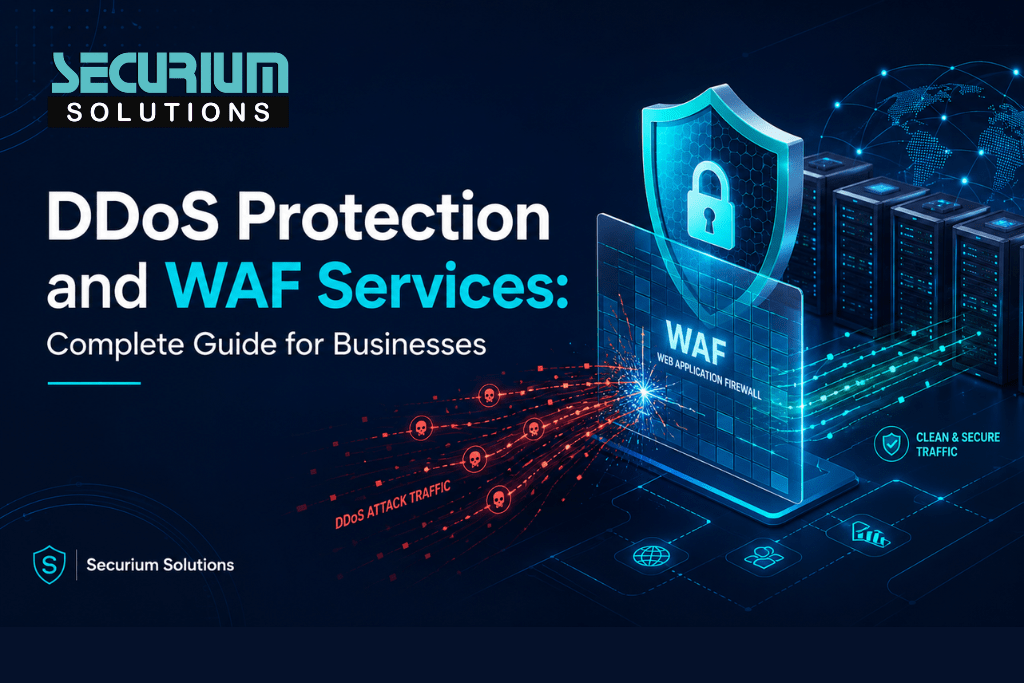
Quick Answer: What Are DDoS Protection and WAF?
DDoS protection helps keep your website, server, application, or online platform available during traffic-based attacks. It blocks or filters malicious traffic that tries to overload your systems.
A WAF, or Web Application Firewall, helps protect your website and web application from malicious requests. It can help block attacks like SQL injection, cross-site scripting, bad bots, suspicious traffic, and API abuse.
In simple words:
DDoS protection protects your website from going down.
WAF protects your web application from being attacked.
For businesses that depend on websites, ecommerce stores, SaaS platforms, payment pages, customer portals, APIs, or cloud-hosted applications, DDoS protection and WAF services in India are very important for security, uptime, and customer trust.
Why DDoS Protection and WAF Matter for Businesses
Your website is often the first place where customers interact with your business. It may handle leads, payments, bookings, support requests, logins, dashboards, customer data, and business transactions.
If your website goes down, your business may lose customers, revenue, leads, and credibility.
If your web application is attacked, attackers may try to steal data, abuse forms, bypass login systems, exploit APIs, or damage your brand reputation.
That is why businesses need both availability protection and application-level security.
DDoS protection and WAF help businesses answer important questions like:
-
- Can our website stay online during an attack?
- Can attackers overload our server with fake traffic?
- Are our login pages protected from brute-force attempts?
- Are our web forms protected from injection attacks?
- Are bots abusing our website or APIs?
- Is our payment page protected?
- Are suspicious requests being blocked?
- Can we reduce downtime and business disruption?
For modern businesses, DDoS protection and WAF are not just technical security tools. They directly support business continuity, customer trust, revenue protection, and online safety.
What Is a DDoS Attack?
A DDoS attack, or Distributed Denial of Service attack, is a cyberattack where attackers send a huge amount of fake or malicious traffic to your website, server, application, or network.
The goal is to overload your system so real users cannot access it.
During a DDoS attack, users may face:
-
- Website downtime
- Slow loading pages
- Failed payments
- App errors
- API failures
- Server overload
- Login issues
- Poor customer experience
For ecommerce websites, SaaS businesses, fintech platforms, cloud applications, and payment systems, even a short downtime can create serious business loss.
What Is DDoS Protection?
DDoS protection is a security solution that detects and blocks malicious traffic before it can overload your website or server.
It helps separate real users from attack traffic.
DDoS protection may include:
-
- Traffic filtering
- Rate limiting
- Bot detection
- IP reputation checks
- Traffic scrubbing
- CDN-based protection
- Network-layer protection
- Application-layer protection
- Real-time monitoring
- Automatic attack mitigation
The main purpose is to keep your website, application, or online service available even when attackers try to take it down.
What Is a WAF?
A WAF, or Web Application Firewall, is a security layer that protects your web application from harmful requests.
It sits between your users and your web application. When someone sends a request to your website, the WAF checks whether that request looks safe or malicious.
A WAF can help protect against:
-
- SQL injection
- Cross-site scripting
- Malicious bots
- Bad HTTP requests
- Suspicious user behavior
- Cookie manipulation
- API abuse
- Brute-force attempts
- Malicious file uploads
- Known attack patterns
- Web scraping
- Application-layer threats
A WAF is especially useful for ecommerce websites, SaaS platforms, customer portals, admin panels, login pages, payment pages, APIs, and business web applications.
DDoS Protection vs WAF: What Is the Difference?
DDoS protection and WAF are both important, but they solve different problems.
DDoS protection focuses on keeping your website or application online during traffic-based attacks.
WAF focuses on protecting your web application from malicious requests and application-level attacks.
In simple words:
DDoS protection protects uptime.
WAF protects application security.
For businesses that depend on online platforms, both should be part of a strong cybersecurity strategy.
Why Businesses Need DDoS Protection
DDoS attacks can affect a business very quickly. One attack can make a website slow, unstable, or completely unavailable.
1. Helps Prevent Website Downtime
If your website goes down, customers cannot browse products, submit forms, access dashboards, make payments, or contact your business.
DDoS protection helps keep your online services available during attack attempts.
2. Protects Revenue
For ecommerce companies, fintech platforms, SaaS businesses, and online service providers, downtime can directly affect revenue.
DDoS protection helps reduce financial loss caused by service disruption.
3. Improves Customer Trust
Customers expect websites and applications to work smoothly.
If your platform is frequently slow or unavailable, users may lose trust in your brand. DDoS protection helps maintain a stable online experience.
4. Reduces Server Overload
DDoS attacks can overload servers, APIs, databases, and network resources.
DDoS protection filters malicious traffic before it reaches your critical infrastructure.
5. Supports Business Continuity
If your online platform is important for business operations, DDoS protection helps ensure that your services remain accessible even during attack attempts.
Why Businesses Need a WAF
Web applications are exposed to the internet, which makes them common targets for attackers.
A WAF adds an extra security layer between attackers and your application.
1. Blocks Common Web Attacks
A WAF can help block common attacks such as SQL injection, cross-site scripting, malicious payloads, suspicious requests, and known attack patterns.
2. Protects Sensitive Data
Web applications often handle login credentials, customer records, payment details, personal data, and business information.
A WAF helps reduce the risk of attackers exploiting application weaknesses to access sensitive data.
3. Reduces Bot Abuse
Bots can scrape content, try stolen passwords, spam forms, abuse APIs, and overload websites.
A properly configured WAF can help identify and control harmful bot traffic.
4. Supports Compliance Readiness
Businesses that handle payment data, customer data, or regulated information often need strong web application security controls.
A WAF can support compliance readiness as part of a broader cybersecurity program.
5. Adds Protection While Vulnerabilities Are Fixed
Even if your application has a vulnerability, a properly configured WAF can help reduce exploitation risk while your development team works on the fix.
A WAF does not replace secure coding or penetration testing, but it adds an important layer of protection.
Common Threats DDoS Protection and WAF Can Help Stop
DDoS protection and WAF can help reduce many types of online threats, including:
-
- Volumetric DDoS attacks
- HTTP flood attacks
- Application-layer DDoS attacks
- Bot traffic
- SQL injection attempts
- Cross-site scripting attempts
- Brute-force login attempts
- Credential stuffing
- API abuse
- Malicious file uploads
- Web scraping
- Bad IP traffic
- Suspicious user agents
- Fake traffic spikes
- Cookie tampering
- Directory traversal attempts
- Request smuggling attempts
- Known vulnerability exploitation
- Form abuse
- Admin panel attack attempts
The exact protection depends on the business environment, traffic patterns, security rules, and configuration quality.
How DDoS Protection Works
DDoS protection works by continuously monitoring traffic and filtering malicious requests before they affect your systems.
Step 1: Traffic Monitoring
The system monitors incoming traffic to your website, application, server, or network.
It looks for sudden spikes, unusual request patterns, suspicious sources, and abnormal behavior.
Step 2: Attack Detection
If the system notices unusual traffic, it checks whether the activity may be part of a DDoS attack.
Warning signs may include:
-
- Sudden traffic increase
- Too many requests from suspicious sources
- Repeated requests to the same page
- Unusual API request volume
- Traffic from risky IP ranges
- Abnormal geographic traffic pattern
Step 3: Traffic Filtering
The protection system separates real users from malicious traffic.
Real users are allowed to access the website, while harmful traffic is blocked, limited, or redirected.
Step 4: Rate Limiting
Rate limiting controls how many requests can be made within a certain time.
This helps stop bots and attackers from overwhelming websites, applications, or APIs.
Step 5: Traffic Scrubbing
In some setups, traffic is routed through a scrubbing system.
This system cleans the traffic by removing malicious requests before safe traffic reaches your business infrastructure.
Step 6: Continuous Monitoring
Even after attack mitigation starts, traffic continues to be monitored.
This helps ensure that real users can access the website while attack traffic remains blocked.
How WAF Works
A WAF checks web traffic before it reaches your web application.
Step 1: Request Inspection
The WAF reviews incoming HTTP and HTTPS requests.
It checks URLs, headers, cookies, request methods, parameters, payloads, and user behavior.
Step 2: Rule Matching
The WAF compares incoming requests with security rules.
These rules help detect SQL injection, cross-site scripting, malicious payloads, suspicious bots, bad IPs, and known attack patterns.
Step 3: Blocking Malicious Requests
If a request looks dangerous, the WAF can block it before it reaches the application.
Depending on the setup, it may also challenge the user, limit the request, or log the activity for investigation.
Step 4: Bot Management
A WAF can help identify harmful bots and separate them from real users.
This helps reduce scraping, brute-force attempts, spam, fake traffic, and automated abuse.
Step 5: Logging and Reporting
WAF logs help businesses understand attack attempts, blocked requests, suspicious IP addresses, and application-layer threats.
These logs are useful for monitoring, investigation, and compliance support.
What Should DDoS and WAF Protection Cover?
A strong DDoS and WAF setup should protect your most important online assets.
This may include:
-
- Business websites
- Ecommerce platforms
- SaaS applications
- Customer portals
- Admin panels
- APIs
- Payment pages
- Login pages
- Cloud-hosted applications
- Web servers
- Application servers
- Public-facing infrastructure
- Mobile app backend APIs
The right coverage depends on your business model, traffic volume, application architecture, and risk level.
When Should Businesses Use DDoS Protection and WAF?
Businesses should not wait for an attack before implementing protection.
DDoS protection and WAF are especially useful:
-
- Before launching a public website
- Before launching an ecommerce platform
- Before releasing a SaaS product
- Before payment gateway integration
- Before major marketing campaigns
- After website downtime incidents
- After bot abuse or spam activity
- After repeated suspicious web traffic
- Before compliance audits
- When running customer login portals
- When exposing APIs publicly
- When hosting critical business applications
If your website or application is important for revenue, customer service, operations, or brand trust, DDoS protection and WAF should be part of your security plan.
Which Businesses Need DDoS Protection and WAF?
Any business with an online presence can benefit from DDoS protection and WAF.
They are especially important for:
-
-
- Ecommerce businesses
- Fintech companies
- Banking and finance platforms
- SaaS companies
- Healthcare portals
- EdTech platforms
- Government websites
- Insurance platforms
- Payment companies
- Travel and booking platforms
- Retail businesses
- Media and telecom companies
- Gaming platforms
- Cloud-based businesses
- Enterprises with customer portals
- Businesses using public APIs
-
If your business depends on online availability or web application security, DDoS protection and WAF are highly recommended.
Business Benefits of DDoS Protection and WAF
DDoS protection and WAF provide both security and business value.
Better Website Availability
DDoS protection helps keep your website and applications online during traffic-based attacks.
Stronger Web Application Security
WAF helps block malicious web requests before they reach your application.
Reduced Downtime Risk
By filtering attack traffic, businesses reduce the chance of service disruption.
Better Customer Trust
A secure and available website gives customers more confidence in your business.
Improved Compliance Readiness
WAF and traffic monitoring can support security control requirements for many industries.
Better Visibility Into Attacks
Logs and reports help businesses understand attack attempts, malicious IPs, bot activity, and suspicious web traffic.
Why Choose Securium Solutions for DDoS Protection and WAF?
DDoS protection and WAF require proper planning, configuration, monitoring, tuning, and response support.
Securium Solutions is a CERT-In Empanelled cybersecurity company offering DDoS protection, Web Application Firewall support, VAPT, web application penetration testing, API testing, cloud security assessment, SOC/SIEM monitoring, incident response, digital forensics, compliance audits, and managed security services.
Our expert-led approach helps businesses protect websites, applications, APIs, servers, and cloud infrastructure from traffic-based attacks and web application threats.
Whether your organization needs WAF deployment, DDoS protection planning, web application security, API protection, or managed monitoring, Securium Solutions can help strengthen your online security.
Final Thoughts
Online availability and web application security are both important for modern businesses.
A DDoS attack can take your services offline. A web application attack can expose your data. Both can affect revenue, trust, and business continuity.
DDoS protection and WAF services help businesses reduce these risks by blocking malicious traffic, protecting applications, improving visibility, and supporting faster response.
For businesses that depend on websites, applications, APIs, cloud platforms, or online transactions, DDoS protection and WAF are not optional. They are important parts of a strong cybersecurity strategy.
Need DDoS Protection and WAF Services in India?
Securium Solutions helps businesses protect websites, applications, APIs, and cloud infrastructure through expert-led DDoS protection, WAF support, VAPT, cloud security assessment, SOC/SIEM monitoring, incident response, and managed cybersecurity services.
Contact Securium Solutions today to protect your online services from downtime, malicious traffic, and web application attacks.
FAQs
What is DDoS protection?
DDoS protection helps detect and block malicious traffic that tries to overload a website, server, application, or network.
What is a WAF?
A WAF, or Web Application Firewall, monitors web traffic and blocks malicious requests before they reach your web application.
What is the difference between DDoS protection and WAF?
DDoS protection focuses on keeping services available during traffic-based attacks. WAF focuses on protecting web applications from malicious requests and application-layer attacks.
Which businesses need DDoS protection and WAF?
Businesses with websites, ecommerce platforms, SaaS apps, customer portals, APIs, payment systems, or cloud-hosted applications should consider DDoS protection and WAF.
Can a WAF stop all cyberattacks?
No. A WAF is an important security layer, but it should be used along with VAPT, secure coding, monitoring, patching, and incident response.
Does DDoS protection help reduce downtime?
Yes. DDoS protection helps filter attack traffic and keep services available during traffic-based attacks.
Why choose Securium Solutions?
Securium Solutions is a CERT-In Empanelled cybersecurity company offering DDoS protection, WAF support, VAPT, cloud security assessment, SOC/SIEM monitoring, incident response, digital forensics, and managed security services.